

Minimalist Retro Design: Everything You Need to Know
Nearly 60 percent of south-african designers say that balancing simplicity and nostalgia is their biggest creative challenge. Minimalist retro design has captured attention for its ability to combine clean lines with familiar vintage touches, making spaces and products feel both modern and emotionally rich. If you want to understand how this unique style transforms everyday tech and décor into something unforgettable, exploring its core principles and variations reveals what sets it apart in the design world.
Table of Contents
- Defining Minimalist Retro Design Principles
- Styles and Variations in Retro Minimalism
- Core Features and Visual Elements
- Applications in Tech Gadgets and Décor
- Common Mistakes and What to Avoid
Key Takeaways
| Point | Details |
|---|---|
| Minimalist Retro Design Principles | This design philosophy combines simplicity with nostalgia, using essential elements to create impactful visual experiences. |
| Core Characteristics | Key features include curated colour schemes, geometric shapes, and a focus on negative space to enhance user experience. |
| Applications in Tech and Décor | Minimalist retro design is effectively applied in tech gadgets and home décor, marrying vintage aesthetics with modern functionality. |
| Common Mistakes | Designers should avoid over-simplification and ensure that every visual element serves a clear purpose to maintain emotional resonance and user engagement. |
Defining Minimalist Retro Design Principles
Minimalist retro design represents a sophisticated fusion of simplicity and nostalgic aesthetics, creating visual experiences that are both streamlined and emotionally evocative. This design philosophy prioritises essential elements while celebrating vintage inspirations, transforming complex visual landscapes into clean, purposeful compositions. At its core, minimalist retro design follows a strategic approach that reduces unnecessary visual noise while maintaining strong emotional connections to historical design sensibilities.
The principles of minimalist retro design fundamentally revolve around three key concepts: functionality, simplicity, and meaningful reduction. Designers working within this aesthetic carefully select retro-inspired design elements that communicate maximum impact through minimal visual language. By embracing the “less is more” philosophy, these designers create spaces and objects that feel simultaneously contemporary and nostalgic. Contemporary minimalist retro approaches often involve strategically choosing colour palettes, geometric shapes, and iconic design motifs that instantly evoke specific historical periods without overwhelming the viewer.
Understanding minimalist retro design requires recognising its commitment to refined elegance. As research indicates, this design approach is about “showing the simplest and most beautiful forms with little content, giving people unlimited imagination.” The goal is not to strip away personality, but to distil design to its most essential and meaningful components. Minimalist retro design achieves this by carefully balancing negative space, selecting iconic yet understated design elements, and creating visual narratives that feel both familiar and fresh. Whether applied to interior spaces, technology interfaces, or product design, this approach transforms simplicity into a powerful form of visual storytelling.
Key characteristics of minimalist retro design include:
- Carefully curated colour schemes
- Geometric and clean line work
- Purposeful use of negative space
- Strategic references to historical design periods
- Functional forms that prioritise user experience
By embracing these principles, designers create experiences that feel simultaneously timeless and contemporary, proving that sophisticated design need not be complicated.
Styles and Variations in Retro Minimalism
Retro minimalism represents a dynamic design approach that seamlessly blends nostalgic elements with contemporary simplicity, creating visual experiences that are both emotionally resonant and aesthetically refined. Retro styles fundamentally derive from past design traditions, capturing the essence of historical periods while maintaining a clean, uncluttered aesthetic that speaks to modern sensibilities.
Within the realm of retro minimalism, several distinctive variations have emerged, each offering a unique interpretation of this design philosophy. Geometric retro minimalism focuses on clean lines, symmetrical shapes, and reduced colour palettes inspired by mid-century modern design. Skeuomorphic retro minimalism incorporates digital design elements that reference physical objects, creating interfaces and experiences that feel both familiar and innovative. Research suggests that these design approaches create “a warm, dramatic, unique, and artistic atmosphere” by strategically referencing historical design languages while maintaining contemporary functionality.
The evolution of retro minimalism encompasses multiple aesthetic subgenres, each with its own distinctive characteristics. For instance, the Frutiger Aero style, prevalent between 2004 and 2013, represents a fascinating intersection of technology and natural imagery, featuring bright colours, optimistic technological themes, and design elements that bridge digital and organic worlds. These variations demonstrate that retro minimalism is not a static concept, but a dynamic design approach that continually reinterprets historical aesthetics through a contemporary lens.
Key variations in retro minimalism include:
- Geometric minimalism
- Digital skeuomorphic designs
- Natural technology aesthetics
- Colour-focused historical references
- Streamlined vintage-inspired interfaces
By embracing these diverse approaches, designers can create visual experiences that are simultaneously nostalgic, functional, and visually compelling.
Core Features and Visual Elements
Minimalist retro design is characterised by a precise balance between historical aesthetic references and contemporary visual principles. Flat design elements serve as a fundamental framework, emphasising simplified visual languages that communicate complex ideas through minimal graphic interventions. The core visual strategy involves stripping design to its essential components while maintaining a powerful emotional resonance with historical design periods.
The visual elements of retro minimalism typically incorporate strategic colour palettes, geometric shapes, and typographic choices that evoke specific historical moments. Research suggests that aesthetic-usability principles play a crucial role in how users perceive and interact with these designs. By carefully selecting visual components that feel simultaneously nostalgic and contemporary, designers create experiences that are both intellectually engaging and visually compelling. The deliberate use of negative space, simplified iconography, and carefully curated colour schemes becomes a powerful communication tool.
Understanding the nuanced relationship between form and function is critical in retro minimalist design. These visual approaches are not merely about creating aesthetically pleasing compositions, but about developing intuitive, user-centric experiences that feel both familiar and innovative. The design language speaks through reduction, using each visual element with intentionality and precision. Vintage-inspired colour gradients, simplified geometric forms, and typography that references historical design movements become the fundamental building blocks of this sophisticated design approach.
Key visual elements include:
- Reduced colour palettes
- Clean, geometric shapes
- Minimalist typography
- Strategic use of negative space
- Iconic design references
By mastering these core visual principles, designers can create retro minimalist experiences that are simultaneously nostalgic, functional, and visually sophisticated.
Applications in Tech Gadgets and Décor
Minimalist retro design has revolutionised both technological devices and interior spaces, creating a unique aesthetic that bridges nostalgia and contemporary functionality. Retro smart gadgets exemplify this design philosophy, transforming everyday technology into visual statements that celebrate historical design languages while delivering cutting-edge performance.
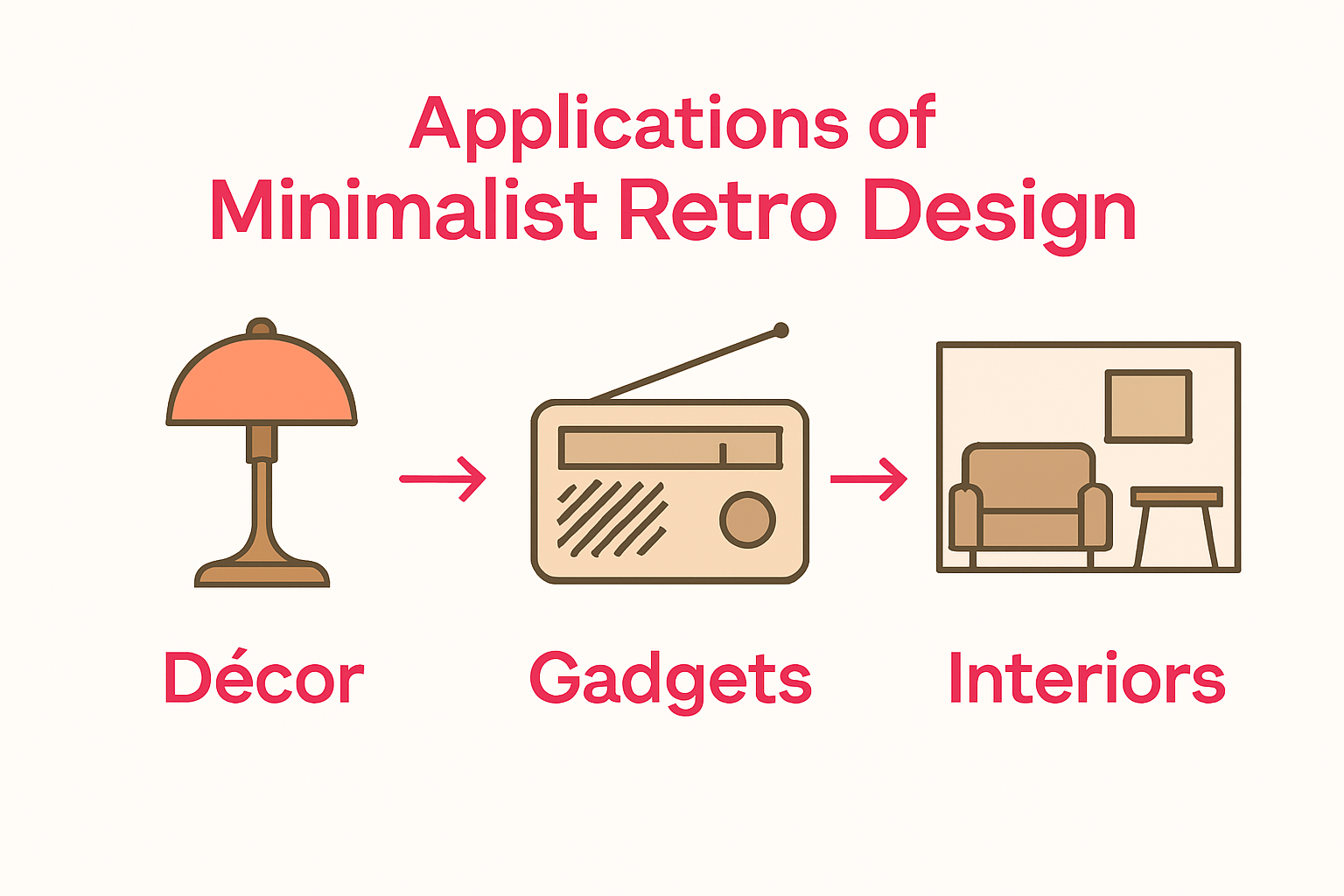
In the realm of tech gadgets, minimalist retro design manifests through carefully curated devices that honour vintage aesthetics while incorporating modern technological capabilities. Bluetooth speakers with mid-century modern silhouettes, smartphones with classic colour palettes, and smartwatches featuring vintage-inspired dial designs represent this innovative design approach. These devices are not merely functional tools but conversation pieces that connect users with design histories, blending emotional nostalgia with contemporary technological expectations.
Home décor represents another fascinating domain where minimalist retro design flourishes. Interior spaces increasingly integrate technological elements that feel simultaneously timeless and contemporary. Vintage-inspired home assistants, wall-mounted smart displays with streamlined geometric frames, and tech accessories that echo historical design movements transform living environments. The key is creating harmonious interactions between technological functionality and aesthetic sophistication, where each design element tells a nuanced story of technological evolution.
Key applications of minimalist retro design include:
- Smart home devices with vintage aesthetics
- Tech accessories featuring historical design languages
- Furniture integrating technological elements
- Audio equipment with classic visual references
- Digital interfaces inspired by historical graphic design
By embracing these design principles, technology and interior spaces become more than functional environments - they become narratives of design heritage and innovation.
Common Mistakes and What to Avoid
Minimalist retro design requires a delicate balance between nostalgic references and contemporary functionality, with many designers falling into predictable traps that compromise the integrity of their visual approach. UI interface design principles emphasise that minimalism is not about removing elements arbitrarily, but creating intuitive, purposeful experiences that communicate effectively through strategic reduction.
One of the most common critical errors in minimalist retro design involves misunderstanding the fundamental philosophy of reduction. Designers often mistake minimalism for simplistic or sparse design, leading to visual experiences that feel empty or disconnected. The key is not to eliminate elements completely, but to ensure that every visual component serves a deliberate communicative or functional purpose. Excessive reduction can strip away the emotional resonance and historical context that makes retro minimalism compelling, transforming potentially engaging designs into sterile, lifeless compositions.
Another significant pitfall emerges when designers prioritise aesthetic nostalgia over contemporary usability. Retro-inspired interfaces and products must seamlessly integrate historical design languages with modern technological expectations. This means avoiding purely decorative elements that do not enhance user experience, and ensuring that vintage-inspired design choices do not compromise functionality or intuitive interaction. The most successful minimalist retro designs create a harmonious dialogue between historical aesthetic references and cutting-edge technological performance.
Common mistakes to avoid include:
- Over-simplifying design to the point of losing narrative context
- Neglecting user experience in pursuit of visual minimalism
- Forcing historical design references that feel inauthentic
- Creating visual experiences without clear functional purpose
- Misunderstanding the difference between reduction and elimination
By understanding these potential pitfalls, designers can create minimalist retro experiences that are both visually sophisticated and genuinely user-centric.
Embrace the Elegance of Minimalist Retro Design with OnlyRetro
Struggling to find tech gadgets and home décor that truly capture the delicate balance between nostalgic aesthetics and modern usability The article on Minimalist Retro Design highlights the challenge of blending simplicity, meaningful reduction and functional vintage references without losing emotional resonance or user experience This is where OnlyRetro steps in to help you achieve that perfect harmony
Discover a curated collection of retro smart gadgets and vintage-inspired accessories that celebrate iconic minimalist retro principles with careful attention to colour palettes, geometric shapes and user-friendly design Every product offers a timeless look that connects you with design heritage while providing cutting-edge technology Why settle for ordinary when you can own gadgets and décor that tell a unique story and enhance your lifestyle Shop now at OnlyRetro and bring nostalgic sophistication into your modern world today
Frequently Asked Questions
What is minimalist retro design?
Minimalist retro design is a design philosophy that combines simplicity with nostalgic elements, focusing on essential components while celebrating vintage aesthetics. It aims to create visually appealing compositions that maintain strong emotional connections to historical design sensibilities.
What are the key principles of minimalist retro design?
The key principles include functionality, simplicity, and meaningful reduction. Designers aim to create impactful visuals through minimal elements while embracing a ‘less is more’ philosophy to make spaces and objects feel both contemporary and nostalgic.
How does minimalist retro design differ from other design styles?
Minimalist retro design differentiates itself by prioritising a clean, uncluttered aesthetic inspired by historical design traditions. Unlike other styles, it blends nostalgic references with modern functionality, creating harmonious interactions between vintage elements and contemporary design needs.
What are common applications of minimalist retro design?
Common applications include tech gadgets with vintage aesthetics, home décor integrating modern technology with classic design elements, and user interfaces that reference historical graphic design while ensuring modern usability.
Recommended
- Minimalist Approach to Retro Style: Complete Guide – OnlyRetro
- Understanding Retro-Inspired Interior Design: A Comprehensive Guide – OnlyRetro
- Retro-Inspired Design Explained: Key Elements and Trends – OnlyRetro
- 7 Tips for Mastering Retro Inspired Decor in Your Home – OnlyRetro
- Minimalist Living Explained: Benefits and Practical Tips – BLUSHBEES USA
- Minimalist Web Design: Complete Guide for Businesses - seo analytic